Dryer Vent Cleaning in Kitchener, Ontario
Dryer exhaust vent cleaning from the back of the dryer to the outside hood, crushed and disconnected vent repair, rerouting of long or foil runs, condo and stacked-townhouse vents, landlord service for multi-unit buildings, and bird guards on exterior hoods — across Kitchener and Waterloo Region. Airflow measured before and after. A written quote before anyone comes out.
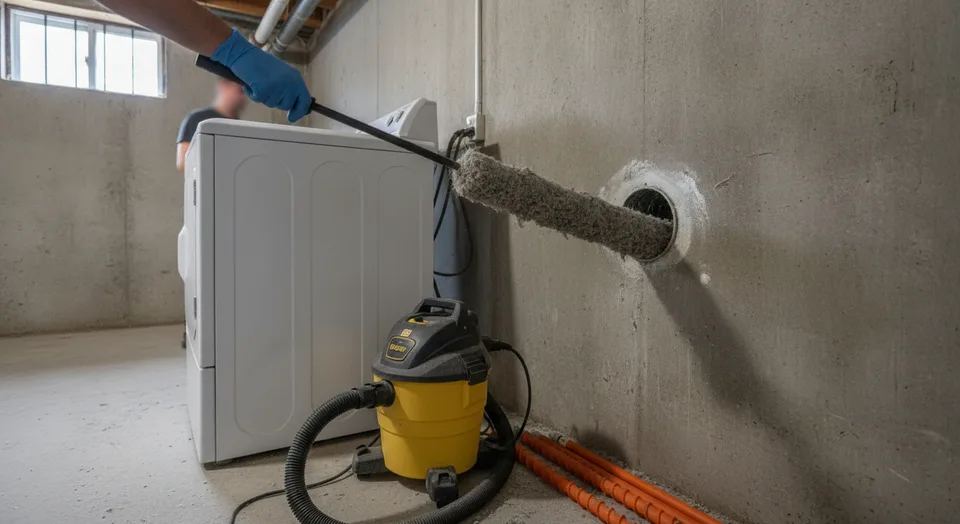
A dryer that takes two cycles to dry a load is almost never a broken dryer. It is a vent that cannot move the air. In Kitchener the reasons are specific. The 1960s to 80s bungalows and sidesplits in Stanley Park, Forest Heights and Rosemount have the laundry in the basement and the vent running twenty or thirty feet through the joists to a hood on the far wall, and a lot of those runs are still the original foil or plastic flex, sagged and half full of lint. The stacked townhouses and condos downtown and in Doon have short runs through a wall or a long one up through a chase to a roof cap that nobody has seen since the building went up. The century homes downtown and around Victoria Park have a dryer wherever a previous owner could fit it, vented out a window well or into a chimney chase. Add a spring nest of starlings in the hood, and you have the calls that come through this line. It is the booking line for one vetted Kitchener dryer vent technician who cleans the full run, measures the airflow, and tells you in writing if the vent needs to be repaired or rerouted instead of just cleaned. Nobody comes out until you have agreed to the number.
Dryer Vent Work We Take On
Residential vent cleaning, crushed and disconnected vent repair and rerouting, condo and stacked-townhouse vents, multi-unit landlord service, and bird guards and hood replacement across Kitchener and Waterloo Region. Dryer exhaust only.
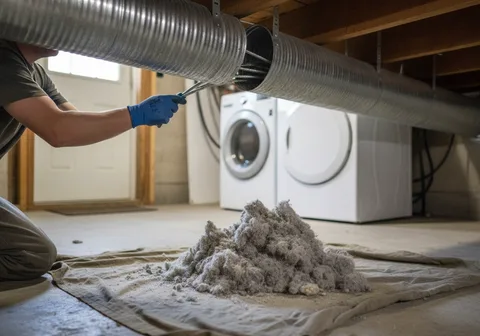
Residential Dryer Vent Cleaning
The full run cleaned from the dryer end and the hood end, the transition duct and lint trap housing done, airflow checked before and after, and a plain report on the condition of the vent.
Learn more →
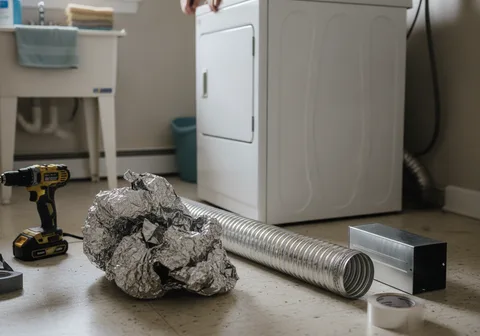
Dryer Vent Repair & Rerouting
Crushed, disconnected, foil or plastic vents replaced with rigid or semi-rigid metal, runs shortened and straightened, and vents that end somewhere other than outside rerouted to a proper hood.
Learn more →
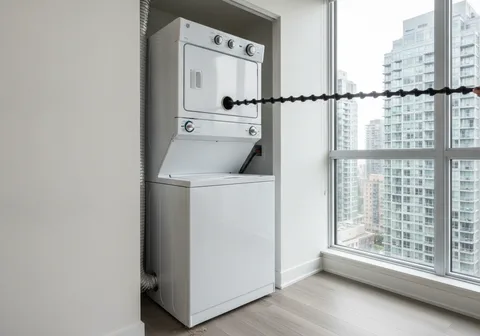
Condo & Townhouse Dryer Vents
Short through-the-wall vents in end units, long vertical chase runs to roof caps in upper units, booster fans and shared terminations — cleaned from inside the unit with the building's rules in mind.
Learn more →
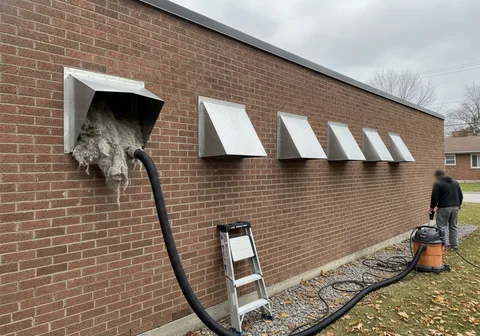
Multi-Unit & Landlord Dryer Vent Service
Whole-building dryer vent service for landlords, condo corporations and property managers: every unit and every termination done in a scheduled run, with a per-unit report for the file.
Learn more →
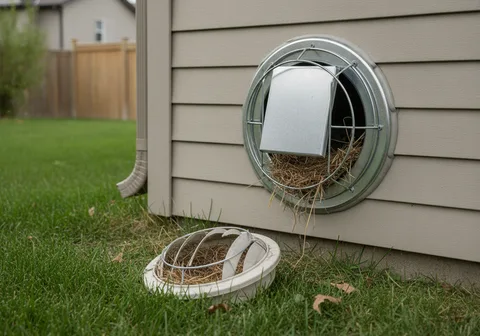
Bird Guard & Vent Cover Installation
Spring nests cleared once the birds have fledged, broken or stuck hoods replaced, and vent guards fitted that stop starlings and sparrows without screening in the lint.
Learn more →
Dryer Vents in Kitchener: Why Yours Is Probably Blocked
Basement laundry and long runs: Stanley Park, Forest Heights, Rosemount, Country Hills. Most of Kitchener's 1960s to 80s housing puts the laundry in the basement, usually in a corner by the furnace, and the dryer vent has to get from there to an outside wall. In a sidesplit or a bungalow that can mean twenty-five or thirty feet of duct through the joists with three or four elbows before it reaches the hood. Every foot and every elbow costs airflow, and lint settles wherever the air slows down. The original vent in a lot of these houses was foil or white plastic flex, hung from the joists with wire, and after forty years it sags between the hangers into low spots that hold lint and moisture. Some were replaced with rigid metal when the basement was finished; many were not, and the flex is now behind a drywall ceiling. The fix is a full-run clean with a rotary brush from the hood end and from the dryer end, an airflow reading, and a straight answer on whether that run should be replaced with smooth metal while the ceiling is accessible.
Condos, stacked townhouses and the ION corridor. The stacked townhouses in Doon and Huron Park and the condo units along the ION line downtown vent two ways. A ground-floor or end unit usually has a short run straight through the wall to a hood a few feet away — easy to clean, easy to check. An upper unit or an interior unit often vents up through a chase shared with the unit above or below, to a roof cap or a wall hood three storeys up that nobody has cleaned since the building was finished. Those long vertical runs collect lint at the bottom of the chase and at the cap. Booster fans were sometimes added when the run was too long, and a booster fan clogged with lint is worse than no fan. Condo boards and property managers usually want the whole building done on a schedule, and that is covered on its own page.
Century homes downtown, Cedar Hill and Victoria Park. The pre-1940 brick houses never had a dryer in the plan, so the dryer went wherever it fit: a basement corner venting through a window well, a main-floor closet venting into a soffit, or a run pushed into an old chimney chase. Some vent into the basement with a lint sock on the end, which is a moisture and lint problem in a house that already has a damp stone foundation. Cleaning these is the easy part. The real job is often figuring out where the vent actually goes, confirming it reaches the outside, and rerouting it to a proper hood if it does not. A dryer that exhausts into a chimney or a wall cavity is not a cleaning job; it is a rerouting job, and the quote will say so.
Birds in the hood, spring and early summer. Every April and May the calls change. Starlings and sparrows find a dryer hood with a broken or missing flap, push past the louvres, and build a nest in the first foot of duct. The dryer stops venting, the laundry room smells, and the flap on the outside wall sits open with grass hanging out of it. Clearing the nest is straightforward once the birds have fledged. Preventing the next one means a hood with a working flap and, where the hood is the type that birds get past, a proper vent guard that keeps them out without trapping lint. Both are on the bird-guard page. Nesting birds are protected while they are on the nest, so timing matters, and the technician will tell you when it can be done.
The fire risk, stated plainly. Lint is dry, fine and burns easily, and a dryer vent is a tube full of it sitting behind an appliance with a heating element. When the vent is restricted, the dryer runs hotter and longer, and the lint inside the dryer cabinet and the first section of duct is where a fire usually starts. The Office of the Fire Marshal and the NFPA both publish plain guidance on dryer safety: clean the lint screen every load, have the vent cleaned when drying slows, never run a dryer with a plastic or foil vent that has been crushed, and do not leave it running when nobody is home. This site does not invent numbers about how many fires that causes. It just does the cleaning and tells you when the vent itself is the hazard.
Serving Kitchener & Surrounding Areas
- Kitchener
- Waterloo
- Cambridge
- Breslau
- Stanley Park
- Doon
Dryer fire safety guidance for Ontario homes comes from the Office of the Fire Marshal, and the National Fire Protection Association publishes the widely used consumer guidance on clothes dryer maintenance and venting. Requirements for how a dryer exhaust duct is built — material, termination outside the building, and what it must not be connected to — fall under Ontario's Building Code, and a rerouted vent that involves a new wall penetration may need a permit through the City of Kitchener. Gas dryers are gas appliances: connection, disconnection and any gas-side work is for a technician registered with the Technical Standards and Safety Authority. The Region of Waterloo handles the disposal side of old ducting and hoods. Anyone working in your home should carry current WSIB coverage and liability insurance, and Consumer Protection Ontario explains your rights if a quoted price changes at the door.
Frequently Asked Questions
How much does dryer vent cleaning cost in Kitchener?
It depends on the length of the run, how many elbows it has, whether it goes through a wall, up a chase or across a basement ceiling, and whether the vent needs repair rather than just cleaning. A short through-the-wall vent in a Doon townhouse is a different job from a thirty-foot foil run in a Stanley Park sidesplit. Planning ranges are on the 2026 cost guide. The number from this site is a written quote for the job, not a starting price.
Do you clean furnace ducts or air ducts too?
No. HVAC air duct cleaning — the supply and return ducts on your furnace — is a separate service with different equipment and a different job, and this technician does not offer it. This site covers the dryer exhaust vent only: from the back of the dryer to the outside hood. If you need the furnace ducts done, book that separately with someone who does that work.
How do I know my dryer vent needs cleaning?
Clothes take longer than one cycle, the dryer and the laundry room are hot to the touch after a load, there is a burnt or musty smell, lint collects behind the dryer or around the outside hood, the outside flap does not open when the dryer runs, or you cannot remember it ever being done. Any one of those is enough. If the technician arrives and the vent is clear, you should be told that and charged for the inspection, not a full clean.
Will cleaning the vent fix my dryer?
If the dryer heats and tumbles but the clothes stay damp, the vent is the usual cause and cleaning fixes it. If the dryer does not heat, does not turn, or trips a breaker, that is an appliance repair and not what this site does. The technician measures airflow before and after, so you will know whether the vent was the problem.
Is my foil or plastic vent a problem?
Usually yes. Thin foil and white plastic flex crush easily, sag between hangers, catch lint on every ridge, and plastic will burn. Current guidance is rigid or semi-rigid metal duct with as few elbows as possible and a short, straight transition behind the dryer. If your run is foil or plastic, the quote will offer a replacement as a separate line, and you can decide.
Which parts of Kitchener do you cover?
All of Kitchener — downtown and the Civic District, Cedar Hill, Victoria Park, Stanley Park, Forest Heights, Rosemount, Country Hills, Bridgeport, Doon and Doon South, Huron Park and the Williamsburg area — plus Waterloo, Cambridge, Breslau and the closer parts of Woolwich and Wilmot.
Ready to Get Started?
Call 226-546-5819 or send the form for a written quote for dryer vent cleaning in Kitchener.